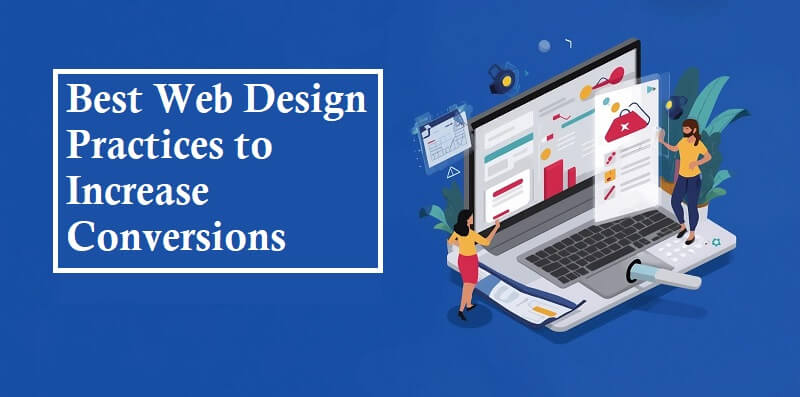
Best Web Design Practices to Increase Conversions
In the modern digital age, your website is often the first impression customers have of your business. An impeccably designed site can encourage visitors to stay longer, trust your brand, and take action—whether it’s making a purchase, filling out a form, or subscribing to your newsletter. Design, however, isn’t just about colors or layouts; it’s about creating an experience that drives results. Understanding the Web Design Practices to Increase Conversions is key to turning casual visitors into loyal customers.
Conversion-targeted web design blends psychology, usability, and aesthetics to guide visitors toward specific goals. According to studies, 94% of first impressions are design-related, and a well-structured website can increase conversion rates by over 200%. The best web design practices go beyond visual appeal—they build trust, enhance usability, and simplify the user journey. Similarly, just as the best keyword research tool for affiliate marketing helps target the right audience, smart web design ensures that visitors are effectively guided toward meaningful actions.
Here, we will cover the choicest net layout techniques to maximize conversions, from the layout of layouts and content order to color psychology and CTA placement. Whatever your role is – Small Commercial Enterprise Proprietors, Fashion Designers, or Marketer – This guide will allow you to design with a target and convert your web page into a conversion machine.
1. Prefer user experience (UX) design
The constructing block of conversion-friendly design is super person experience (UX). A website that is difficult to use or hard to determine is instantly sending site visitors packing. UX is targeted around how humans use your website, making each click make sense seamlessly.
Core UX Principles for Increased Conversions
- Simplicity Reigns: Don’t muddle matters up. Every page needs to have an unmarried purpose and few distractions.
- Visual Hierarchy: Direct users naturally with length, shade, and area. Headings, CTAs, and key sections have to stand out.
- Consistent Navigation: Have predictable and accessible menus. Users need to in no way marvel in which something is.
- Mobile Responsiveness: More than 60% of customers get admission to on mobile. Responsive design method your website online suits every display perfectly.
- Fast Loading Times: A 1-second postpone can decrease conversions by using 7%. Minify images and use lean code.
Tip: Conduct usability checking out. Ask real users to perform moves (like shopping for a product or signing up). Their comments well-known showed friction points that would harm conversions.
2. Optimize Page Loading Speed
Speed is a silent conversion killer. Studies display that fifty three% of mobile visitors abandon a domain that takes greater than three seconds to load.
How to Improve Page Speed
- Compress pix using gear like TinyPNG or ImageOptim.
- Use a Content delivery network (CDN) to serve the material more rapidly throughout the areas.
- Minify CSS, HTML and JavaScript files.
Browser caching.
- Select high-overall performance website hosting optimized for your CMS (e.G., WordPress or Shopify).
- Bonus Tip: Review your present day overall performance using Google PageSpeed Insights or GTmetrix.
Faster web sites now not the most effective beautify person revel in however also rank higher in Google seek effects—yet every other organic conversion increase.
3. Mobile-First Design
With cellular traffic ruling the net, mobile-first design isn’t a preference anymore. Mobile-first design allows you to make sure your layout, typography, and CTAs are set up on smaller monitors first before scaling as much as desktop.
Mobile Design Tips
- Make buttons big enough for touch.
- Employ collapsible menus (hamburger icons) for neat navigation.
- Minimize text blocks; prioritize scannable replicas.
- Avoid full-page pop-ups.
Mobile customers generally tend to transform more without difficulty whilst the process is seamless. Employ autofill fields, one-click fee implementations, and sticky CTAs to facilitate movements.
4. Use ready and reassured call-to-action (CTAS)
A call-to-action (CTA) is the place where the conversion is magic. Whether it is “purchased now”, “” “or” book a free demo “, CTA must be visually and psychologically distinguished.
Effective CTA strategies
- Visibility: Practice the opposite colors of the CTA button that complements your overall plan.
- Clarity: Do not use a normal text that “click here”. Instead, use the action-oriented language- “Start my free test” or “Download the guide”.
- Location: Place the CTA over the board and repeat them in strategic locations on long sides.
- Immediation and values: Include words that express time shortages or value- “Limited suggestions” or “Save 30% today.”
Examples:
- Bad: Submit Form
- Good: Get My Free Consultation Now!
In addition, CTA variations through the A/B tests on color, wording or placement best perform.
5. Press in color psychology
Color triggers emotions that guide buying behavior. Knowledge of color psychology helps design pages that are emotional resonance and converted.
Color Association that sells:
- Blue: addiction and belief (use of banks and mother -i -law businesses).
- Red: Speed and enthusiasm (excellent for sales button).
- Green: Development, nature and welfare (perfect for green brands).
- Orange: enthusiasm and energy (well -liked for CTA).
Keep it balanced: Make CTA’s oily colors, but the background neutral. Always test different combinations and inspect which appeals to the audience.
6. Foster Trust in Design
Conversions rely upon agreement. If users do not feel steady, they may not purchase—regardless of how lovely your internet site is.
Trust-Building Design Elements
- Visible Contact Information: Include cope with, phone range, and stay chat feature.
- Reviews and Testimonials: Show actual customer evaluations with names or photos.
- Security Badges: Display SSL certificates and belief seals at checkout.
- Professional Imagery: Don’t use reasonably-priced-looking inventory pictures; simplest use awesome real snap shots.
- About Us Page: Share your brand tale brazenly.
Also, highlight affiliations, certifications, or partnerships to boost credibility.
7. Enhance Readability and Content Layout
Visitors don’t examine phrase by means of phrase—they scan. Make your content easily consumable.
Best Practices
- Employ brief paragraphs with plenty of white space.
- Emphasize key factors through bullet lists.
- Keep typography stable with readable fonts (at least 16px).
- Use titles (H2, H3) to arrange information.
- Add visual -infograph, chart and icon to section text.
The readable material increases time and activates users.
8. Design Emotionally Compelling Visuals
Human beings indicate 60,000 examples more rapidly than visual materials. Proper imagery enables better story tell and activates customers to take action.
Visual Strategies
- Employ true photographs that resemble your audience.
- Embed explainer videos or product demos.
- Utilize icons to make data clean to understand.
- Maintain constant style—shade palette, photograph tone, and illustration fashion.
If your enterprise sells products, use high-resolution pics with zoom-in capabilities and multiple angles. For provider-based totally web sites, use storytelling movies showing transformation or success.
9. Optimize Forms for Conversions
Forms are key conversion points—whether or not for e-newsletter signups, costs, or purchases. Poorly designed form users can damage travel.
Tips for high-converted forms
- Keep fields minimal—most effectively ask for crucial facts.
- Use autofill and clever defaults.
- Split prolonged bureaucracy into numerous steps with progress signs.
- Make privacy guarantees: “We may not ever share your e-mail.”
- Implement inline validation to keep away from frustration.
A/B test shape length and CTA text on an everyday foundation to optimize submission prices.
10. Leverage Analytics and A/B Testing
Design picks need to be informed by facts, no longer guesswork. Google Analytics, Hotjar, and Crazy Egg divulge the manner customers have interaction together with your internet site.
What to Track
- Click-through on CTAs
- Bounce rate
- Session length
- Form abandonment
A/B testing lets you check two design variations and spot which one performs better. Even minor adjustments—together with button color or headline adjustment—can result in giant conversion boosts.
11. Personalization and AI in Web Design
In 2025, AI tool-driven personalization has emerged as one of the key drivers of conversion increase. Today’s websites appoint gadget studying to offer content material in reaction to user moves.
Examples:
- Personalized product pointers.
- Dynamic landing pages in line with vacationer intent.
- Chatbots provide immediate, on-point assistance.
AI also refines layout factors—adjusting headlines, images, or CTA placement automatically based totally on person profiles. Applications which include Adobe Sensei and Figma AI are revolutionizing the way designers beautify engagement and conversion.
12. Accessibility and Inclusivity
An on hand internet site makes it viable for everybody—disabled people covered—to engage with your content material. It’s additionally a prerequisite in most countries from a legal angle.
- Accessibility Best Practices
- Use opportunity textual content (alt text) for pix.
- Provide ok color contrast.
- Use keyboard-pleasant navigation.
- Offer captions for motion pictures.
Accessible web sites do not simply open up your target market but also reflect social duty—trusting and loyalty.
13. The Power of Social Proof
Social evidence eliminates doubt. Guests trust others greater than you.
- Methods to comprise social evidence
- Show consumer evaluations up the front.
- Show cutting-edge purchases or signal-ups (“John in Madrid just reserved a consultation”).
- Use influencers or press mentions.
- Include trademarks of manufacturers or customers you have labored with.
Having social proof to your website online during boosts believes and gets traffic to do so with a bit of luck.
Conclusion
Embedded in the middle of every high-changing website online is one fundamental reality: layout for humans, not pixels. Each component—font selection to CTA placement—has to work inside the person’s revel in.
Conversion-centered net layout is not approximately fooling traffic; it is approximately keeping them closer to good sized moves through simplicity, belief, and usability. Through merging amazing UX, cell-friendliness, emotive pix, and compelling CTAs, your web site can turn into your most effective marketing asset.
Begin along with your users. Test incessantly. Refine continually. And most significantly, layout with empathy—because whilst users experience heard, conversions happen certainly.