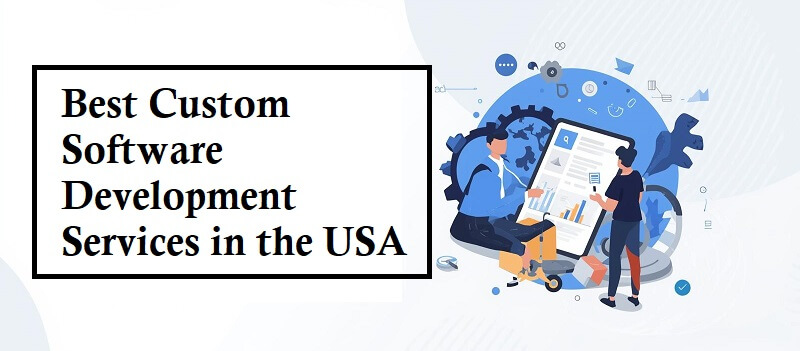
Best Custom Software Development Services in the USA (Expert-Reviewed)
Finding the excellent custom software development services within the USA can be hard, in particular with countless groups promising innovation, expertise, and rapid delivery. To assist you’re making an assured selection, we’ve compiled a professional-reviewed list of top development corporations acknowledged for building dependable, scalable, and future-ready virtual answers.
Whether you need a fully custom internet platform, a mobile application, company software, or advanced technology like AI and cloud integration, these service providers stand out for their technical excellence and proven results. This guide also touches on how AI is changing web design, helping you understand the evolving digital landscape. It simplifies your search by highlighting industry leaders who consistently deliver high-quality, customer-focused software built to meet specific business needs.
How I evaluated suppliers (selection criteria)
1. Technical qualification
I assessed each vendor’s skills in programming languages, frameworks, cloud platforms and emerging technologies. Companies that demonstrate strong engineering depth, documented expertise and up-to-date practice are ranked higher.
2. Portfolio quality
Real world experience was assessed through case studies and past work completed in similar industries. I looked for vendors that had demonstrable success building scalable, secure and user-friendly solutions within organizations of various sizes, across varying industry types.
3. Customer feedback and reputation
Third-party evaluations, recommendations, and repeat customers contributed to credibility. To establish credibility, I evaluated consistency in communication, delivery times, and post-launch support.
4. Process and project management
A strong development methodology – whether Agile, Scrum or hybrid – was essential. I looked for vendors that offered transparent workflow, clear documentation, defined milestones and proactive risk management.
5. Team structure and talent quality
I examined whether the vendors had cross-functional teams—developers, QA engineers, UX designers, and PMs—with pertinent knowledge of the domain and unanimous traditions of collaboration.
6. Security and Compliance Standards
Vendors were ranked for adherence to best practices in data security, code review, conformance certification, and secure systems development lifecycle.
7. Value for the investment
Finally, I assessed fair pricing, the engagement model’s flexibility, and the overall value delivered versus cost to ensure that each vendor offered tangible ROI.
Who this listing is for
This listing is designed for businesses and decision-makers in search of reliable, top notch custom software development companions within the USA. It’s perfect for founders building their first product, mounted organizations modernizing legacy structures, and agency teams needing specialized knowledge for complex virtual initiatives.
If you’re comparing a couple of carriers, trying to understand marketplace standards, or seeking out guidance on selecting an extended-time period generation associate, this manual will help you make knowledgeable selections.
It also advantages non-technical leaders—together with CEOs, COOs, and product managers—who need clear, realistic criteria for assessing development skills. Whether your precedence is innovation, scalability, pace, or value-effectiveness, this curated listing gives a start line tailored to diverse task desires.
Top custom software development services (USA) — condensed reviews & URLs
Below are vetted firms I recommend for different company needs: enterprise digital transformation, product engineering, fast MVPs, or staff augmentation. Each listing includes a short profile, strengths, typical engagement types, and the company URL.
1. ThoughtWorks — Enterprise transformation + product engineering
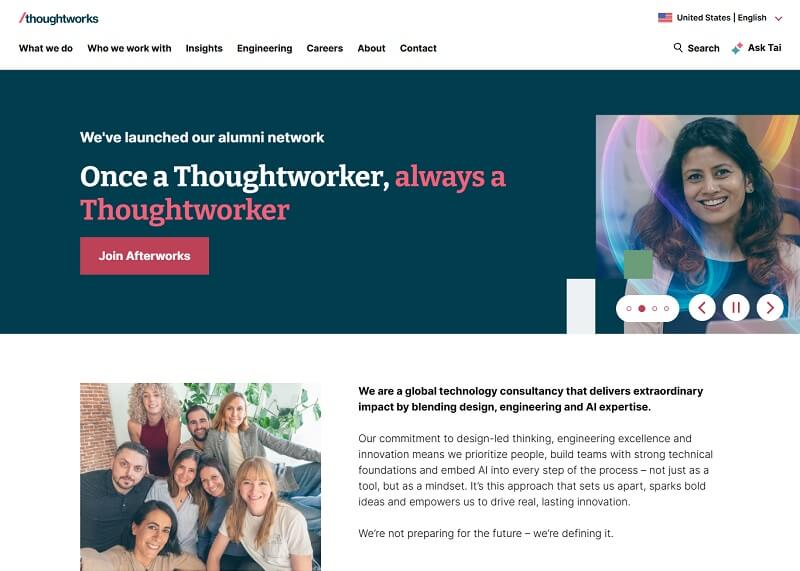
Why pick them: ThoughtWorks is famous for model-changing engineering practices (continuous delivery, evolutionary architecture) and strong senior engineering talent. They excel at complex, mission-critical software and culture change.
Best for: Large companies and regulated sectors seeking digital transformation.
2. EPAM Systems — Engineering scale + global delivery
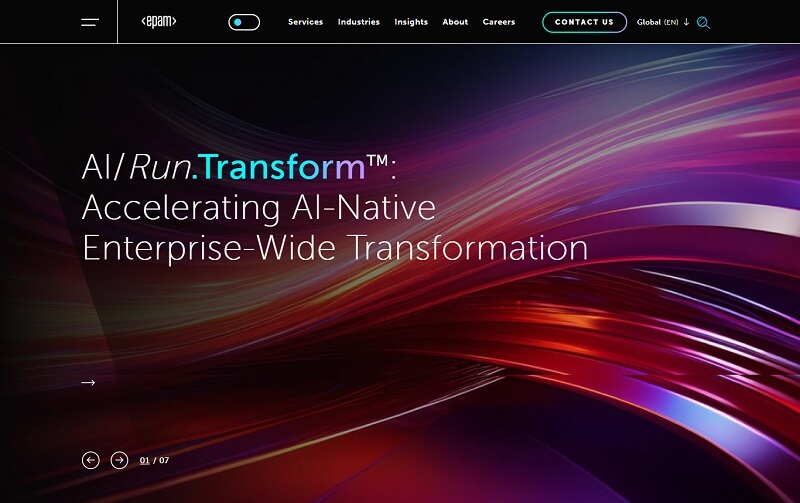
Why pick them: EPAM combines high-quality engineering at scale with strong delivery governance and industry vertical experience (finance, healthcare, retail). They’re a safe option for large, multi-year platforms.
Best for: enterprise modernization, large platforms, integrated testing and managed services.
3. Cognizant – Full Service + Industry depth
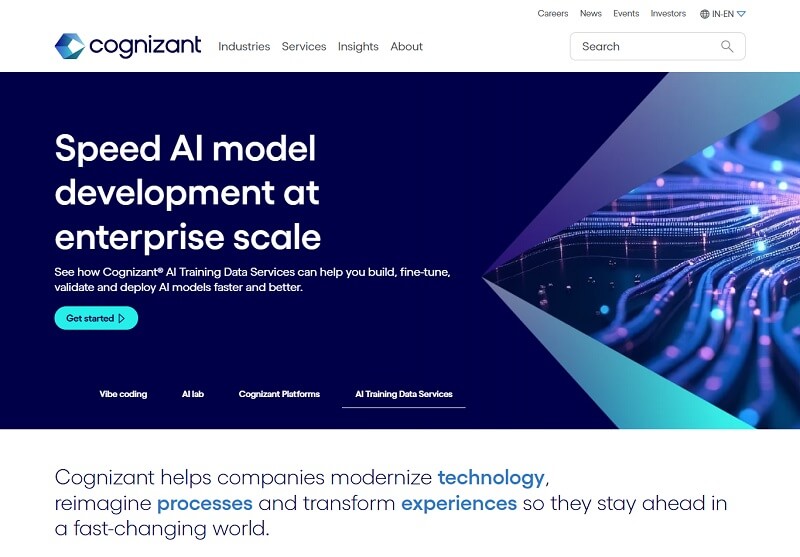
Why choose them: Cognizant combines enterprise strategy and delivery with deep skills in cloud, AI and legacy modernization. Great when you need advice and implementation.
Best for: Enterprises that require end-to-end program delivery and on-premises/offshore balance.
4. Accenture/Accenture Song – Strategy to Scale Engineering
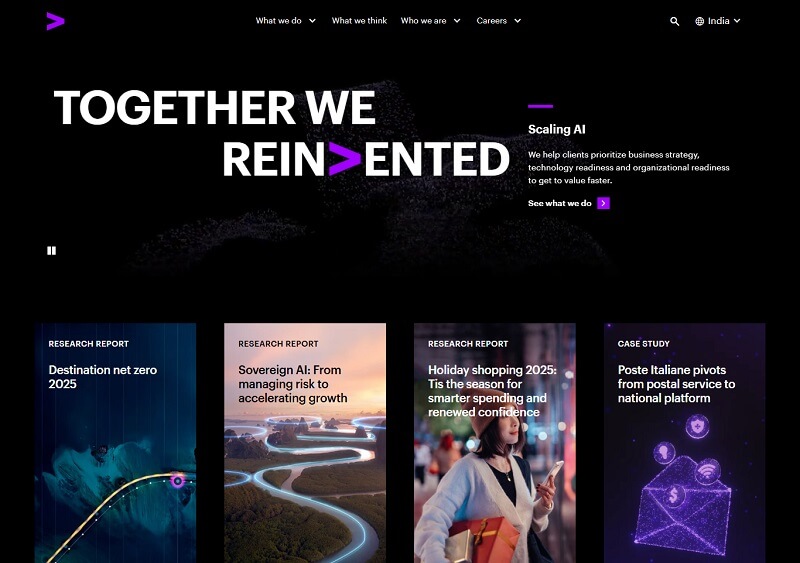
Why choose them: Huge capabilities in consulting, cloud transformation and specialized software. When you need scale, strong governance and integrated consulting teams, Accenture is the best choice.
Best for: Very large companies, regulated industries and rollouts in several countries.
5. BairesDev — Rapid crew assembly nearshore skills
Why pick them: Strong at staffing skilled engineers fast and going for walks give up-to-quit product builds with Latin America-based teams (nearshore for US). Good for startups and scaleups that need pace and fee efficiency.
Best for: Fast MVPs, ongoing body of workers augmentation, product characteristic ramp ups.
6. ScienceSoft — Mid-market product engineering records know-how
Why pick out them: ScienceSoft provides dependable complete-stack development, with strengths in information analytics, BI, and customer-going through portals. They’re acknowledged for regular delivery and robust QA.
Best for: Mid-marketplace corporations and organizations wanting dependable custom app build and analytics.
7. Toptal – Freelance engineers and product teams.
Reasons for selecting: If you need a fully vetted freelance engineer or short term senior architect, Toptal is amazing; great for busting defects and accelerating product development.
Perfect for: Entrepreneurs and small organization of innovators who’re searching out excessive-degree talents to unexpectedly produce something in a key duration.
9. Netguru – Product design + engineering (strong UX focus)

Why choose: Netguru combines product design and engineering for their web and mobile products. They excel at taking ideas from UX into production.
Best for: UX based product creation and feature launches
10. Globant – Digital native transformation and creative engineering
Why choose: Globant connects creative digital experiences with the engineering strength. Where the user experience is what differentiates the product, they are a great partner.
Best for: Digital product innovation, customer experience
11. Iflexion – Flexible customized software (B2B portal, SaaS)
Why choose: Long experience in building B2B portals, SaaS products and integration projects. Very profitably engineering and long-term partnerships.
Best for: SaaS product development, integration projects.
12. Dev.Pro – Product development and team expansion
Why choose them: Focused on US customers with a close-knit engineering team and strong full-stack capabilities. Good mix of mid-market prices and delivery forecasts.
Best for: Startups and product teams that need stable engineering capabilities.
How to choose the right accomplice – 9-factor checklist
Clearly outline your mission’s scope:
Before exploring, outline your desires, required capabilities, target users, and anticipated timeline. A clear scope enables us to clear out appropriate partners.
Assess Technical Expertise:
Verify whether the organization is a professional inside the technologies and platforms required in your undertaking, be it web, mobile, cloud, AI, or corporation systems.
Review enterprise revel in:
Choose partners who recognize your business section. Domain know-how speeds discovery, reduces miscommunication, and improves answer relevance.
Look at previous projects of similar complexity:
Examine portfolios and case studies: Strong case studies are indicative of established execution and problem-fixing capability.
Verify their reputation and critiques:
Customer testimonials, impartial opinions and 0.33-birthday party opinions are necessary to gauge reliability, communication pleasant and lengthy-time period satisfaction.
Consider the development technique:
Agile, scrum or possibly a few hybrid versions? An established workflow ensures transparency, predictable milestones, and powerful collaboration.
Communication practices:
Regular updates, task managers and actually defined channels of conversation for seamless improvement.
Ensure safety and compliance requirements:
Check statistics safety practices, compliance certifications, and security checking out protocols related to regulated industries.
Compare pricing and engagement fashions:
Understand their pricing shape – constant, hourly or committed team. Choose the only that exceptionally suits your budget and undertaking dynamics.
Specific engagement models – which one is right for you?
Fixed price model
Best applied to projects whose scope is well-defined, requirements are clear, and timelines are usually predictable. Since costs are pre-agreed, budgeting is easier. However, changes in the course of development may require renegotiation.
Time and material model
Best for growing projects where requirements are flexible. You are paid for hours actually performed and resources used. This model has high adaptability and is suitable for long-term or complex software development.
Dedicated team model
Ideal for corporations looking for sustainable boom or specialised information, you hire a dedicated crew to work solely to your assignment, with introduced scalability, collaborative specialization, and speedy iterations. This is particularly perfect for startups and companies looking for longer-time period partnerships.
Ballpark Pricing (Very Rough Estimate)
The fee estimates to develop custom software vary significantly relying on a range of factors that encompass complexity, platform, capabilities, and crew information. Small projects, like easy net apps or MVPs, are predicted at $20,000-$60,000. Solutions of medium complexity, inclusive of multifunctional cell apps or enterprise platforms, normally fall inside.
Larger agency-level structures with advanced integration, safety layers, or AI abilities could variety from $150,000 to over $500,000. Hourly prices additionally range: U.S.-primarily based builders rate from $eighty to $180 consistent with hour, relying on seniority and know-how. These figures are just tough signs; the real rate becomes clean after certain seek and technical scoping.
How to safely operate a pilot
Limited scope:
For features that are required to reduce complexity and associated costs and risks in testing.
Establish measurable targets through determining precise measures of success, including performance goals, usability goals, or blunders thresholds.
Isolate the surroundings:
Use sandboxes or a separate take a look at the environment to guard the production systems and sensitive data.
Designate consultant check users:
Include a small number of test users that might fairly emulate actual person conduct.
Develop a chance control plan that carries diverse potential threats and ways to address them.
Continuously monitor:
Observe the performance, consumer feedback and technical balance in the course of the pilot.
Capture it all:
Record observations, concerns, and modifications accordingly to help justify decisions.
Evaluate test results:
Match pretend you found out test outcomes with objectives to see if you will further the project, place the project on hold or end the project.
Conclusion
Software testing is continuously evolving, and the testing tools QA engineers will be required to employ in 2026 will need to be faster, smarter, and fully integrated into modern development workflows. As a matter of fact, today’s best testing platforms are all about automation, real-time reporting, actionable AI insights, and collaboration.
Whether teams need useful testing, API checking out, overall performance trying out, security checking out, or complete CI/CD, there are presently masses of straightforward alternatives in the market to cowl checking out needs.
The selection is based totally on your scale of development, team capability, and destiny vision in your merchandise. With the right stability of flexible and future-evidence trying out equipment, QA engineers can create higher satisfactory products, launch software programs quicker, and make certain that the developer’s vision is found out to each user on every platform.
FAQ
Are open-source testing answers enough for an organization undertaking?
Yes. There are many open-source solutions that big enterprises are using because they are trustworthy around the world, such as Selenium, Cypress, Playwright, JMeter. They are comprehensive in community support, geared towards regular and validating releases, and adjustable through extensive customization. But you may need to put in more attention and effort to manage them contrary to paid tools.
How does AI enhance software testing in 2026?
AI basically empowers QA teams to speed up testing by way of auto-generation of test cases, self-healing scripts, predictive analysis, bug detection, and smarter regression testing. Organizations will see reduced manual testing in favor of increased test coverage with the use of AI-enabled tests, thus ultimately speeding up the testing process.
Is it possible for one tool to do all the project testing?
Generally, one tool cannot accommodate all coverage needs. For example, UI testing, API testing, performance testing, security testing, mobile testing, tend to each require different tools. The QA Team will likely be working with a combination of tools which work together and give you full coverage in tests.
Do QA engineers need to possess coding skills in order to use modern testing tools?
Generally, most recent testing tools are designed with low-code or no-code features; tests can thus be automated without great knowledge of programming. But basic knowledge of coding offers better flexibility, enables one to debug, and use complex automation tasks, especially for enterprise final use.